
Nicholas County Value Types
Kentucky assesses taxable property at one hundred percent of fair cash value. The Nicholas County PVA applies that standard when valuing parcels, deeds, and other property records. An appraisal is only the starting point. County, city, school, and special districts each set their own rates afterward, so the assessed value is neither a tax rate nor the final tax bill a property owner of record pays.
| Value | What It Is | Where |
|---|---|---|
| Fair cash value | Expected price in a fair voluntary sale | Nicholas PVA assessment |
| Assessed value | Value carried for property-tax assessment | PVA parcel record |
| Last sale consideration | Amount tied to a past transfer, if recorded and displayed | Deed or PVA sale file |
| Private appraisal | Opinion for a specific date and purpose | Appraiser's report, not a county record |
A recorded sale is history, and history can be messy. The deed price may reflect a family transfer. It may carry unusual terms, multiple tracts, or consideration that never passed through an open market. The PVA's figure, by contrast, is an annual public assessment. A private appraisal can walk the property and choose current comparable sales. Whichever figure you cite, label it plainly so the comparison stays honest.
Fair Cash Value in Kentucky
The PVA defines fair cash value as the price property would bring in a fair voluntary sale. The buyer and seller must both act willingly. The Kentucky Department of Revenue assessment process spells this out. Real property is assessed at 100 percent of fair cash value. The assessment is reviewed every year.
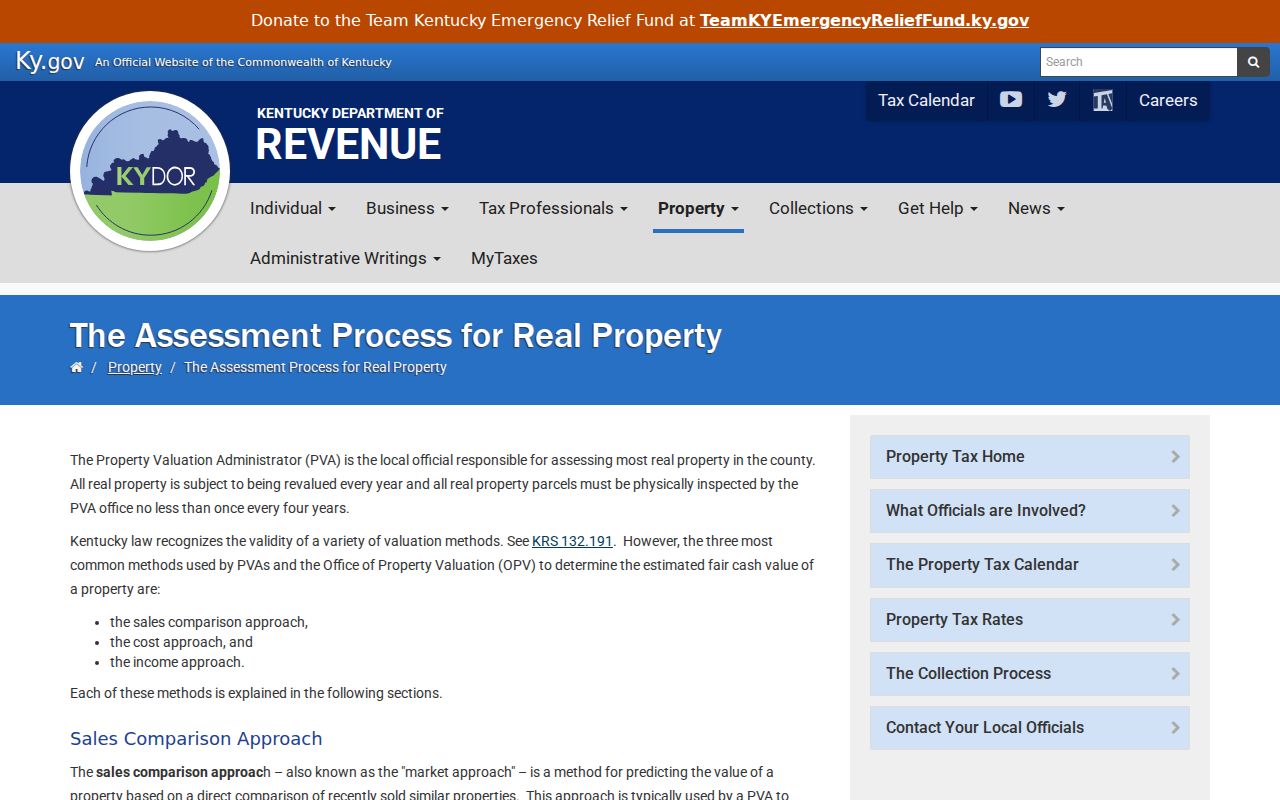
The state assessment page sets the valuation standard. For the exact field labels on one parcel, you still need the live Nicholas parcel card. The same goes for the effective year. The source is the PVA. Mass assessment works from property facts and market evidence across many parcels at once. It is not the same as a site-specific appraisal. The PVA maintains a sale file. The qPublic card shows whatever valuation fields the portal presents in a given session. Trust only the labels you can see on the live record. Wait for the parcel card itself before assuming a sale-price, land-value, or improvement-value field exists.
Nicholas Annual Value Review
Kentucky revalues property every year, with a physical inspection on a four-year cycle. January 1 is the assessment date. That date matters. A value and its owner of record belong to a tax year. It does not necessarily belong to today's market or a sale closing later that year. Changes in condition, land use, improvements, or nearby sales can shift a later assessment. An exemption can change the taxable assessment without disturbing the underlying fair-cash-value concept. No countywide value trend is published. So resist reading one parcel's rise or fall as a countywide Carlisle or Nicholas County pattern.
Note: Read the tax year beside a Nicholas County assessed value before comparing it with a later sale or appraisal.
Check a Nicholas Property Value
The official online route is the Nicholas qPublic portal. Basic property information is free there. Detailed appraiser or realtor information may carry a fee. Work only with the search modes and card fields the portal actually shows, since those options can change between sessions.
- Locate the parcel by situs address, owner, or exact map ID if the live portal offers that mode.
- Copy each displayed value label, the assessment year, parcel ID, class, and exemption notation.
- Check the County Clerk deed for the latest recorded transfer and consideration only if shown.
- Compare the dates and purposes of the numbers, not just their size.
- Assessed value
- The value carried by the PVA for assessment.
- Fair cash value
- Kentucky's willing-buyer, willing-seller value standard.
- Sale consideration
- The amount stated for a transfer, which may not describe a normal market sale.
- Reassessment
- A later official review or change to the parcel's assessed value.
Nicholas Land and Improvements
A well-built parcel card may split value into land, improvements, and a total. But the exact Nicholas field labels appear only on the live record. If the split is shown, copy each component. Check that the parts reconcile with the displayed total. Never assume a building value equals replacement cost. Property class, acreage, exemptions, and tax district add context. So do sketches and sale data when the card displays them. A map ID is a join key, not a valuation method. State GIS imagery and parcel outlines cannot substitute for an appraisal.
Sale Price Versus Assessment
To test a last sale, the local sources are the County Clerk's deed records. The PVA sale file is the other one. A deed index may show document type and date. The full instrument may state consideration. Match the legal description carefully. A deed can cover several parcels or only part of a tract. A sale price reflects one transaction. An assessed value reflects the public valuation process as of its date. Family deeds, quitclaims, and commissioner sales may not offer a clean market comparison. For a true opinion of current market value, lean on several similar, valid sales. A licensed appraiser can help.
Nicholas Exemption Context
Kentucky homestead and disability exemptions shrink the amount subject to tax. They do not convert that reduced figure into market value. When comparing values, note the field label carefully. Check whether the record shows fair cash value, assessed value, or an exemption-adjusted amount. The PVA forms page offers the exemption routes. Kentucky DOR explains the statewide standards. Questions about a tax bill, payment, or appeal belong with the county's property tax records. For value itself, the discipline is simple. Preserve the field label, and know exactly what was reduced.
Nicholas Assessed Value Limits
A Nicholas County assessed value is an official tax record. It is not a guaranteed sale price, replacement cost, loan value, or boundary acreage. It can drift from the market after the assessment date passes. A licensed appraiser can build a current opinion for a defined purpose. The appraiser does this by reviewing the property and market evidence. Do not press a tax card into service as a survey. DOR maps exist for identification, not conveyance. Before deciding which value record belongs to the land, confirm the parcel. Also confirm the legal description.
Value versus price. A Nicholas County assessment supports taxation. It does not state what the property will sell for and is not a private appraisal.